


An outdated or faulty switchboard is one of the most common causes of electrical fires in Australian homes. Here's how to spot the warning signs before they become a serious hazard.
Your home's switchboard — also called a meter box or fuse box — is the nerve centre of your electrical system. It distributes power to every circuit in your home and, crucially, houses the safety devices that protect you and your property from electrical faults.
The problem? Many Melbourne homes — particularly those built before 1990 — are still running on outdated switchboards with old ceramic fuses and limited or no safety switches. These boards weren't designed to handle modern electrical loads, and they lack the protective devices that could save your life in a fault situation.
According to Energy Safe Victoria, electrical faults cause over 4,000 house fires in Victoria each year. A significant portion of those trace back to switchboard and wiring issues.
So how do you know if your switchboard needs upgrading? Here are five warning signs to watch for.
1. You Still Have Ceramic (Porcelain) Fuses
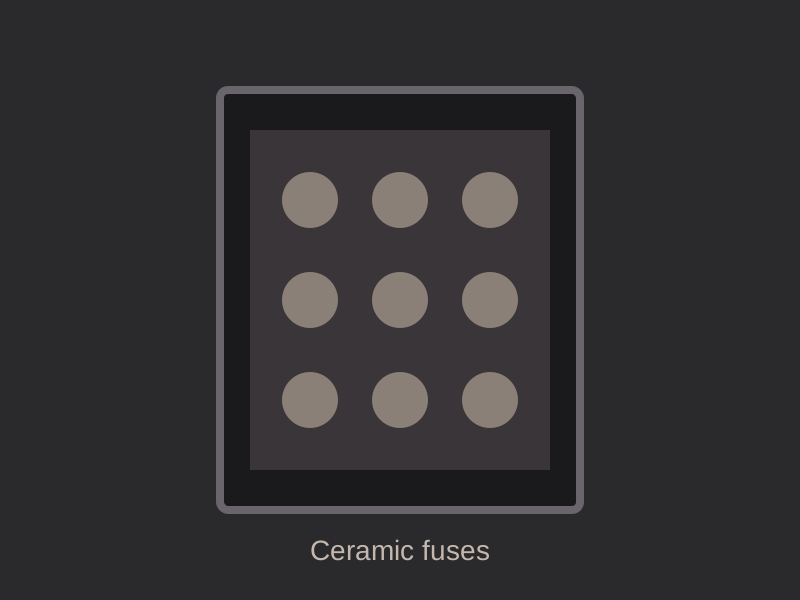
Open your switchboard and look at what's inside. If you see small porcelain or ceramic plugs with thin wire threaded through them, you have an old rewirable fuse board — and that's a problem.
Ceramic fuses were the standard in Australian homes built before the 1970s. They can be rewired when they blow, but here's the risk: many homeowners (and some cheap operators) rewire them with wire that's too thick, effectively bypassing the protection entirely. An overloaded circuit simply doesn't trip — it keeps drawing current until the wiring gets hot enough to start a fire.
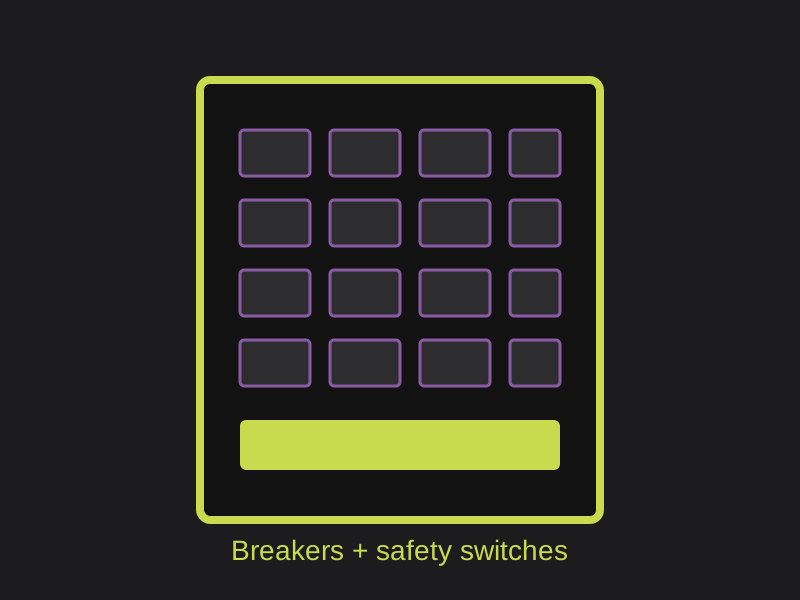
Modern circuit breakers, by contrast, trip automatically and immediately when a fault is detected. There's no rewiring required — you just flick them back on. And critically, they can't be defeated with thicker wire.
What to do: Contact a licensed electrician to assess and replace the switchboard with a modern unit fitted with circuit breakers and safety switches (RCDs).
2. No Safety Switches (RCDs) Installed
A Residual Current Device (RCD) — commonly called a safety switch — monitors the current flowing through a circuit and cuts power within milliseconds if it detects a fault. It's the device that could prevent electrocution.
Under current Victorian regulations, safety switches are mandatory on all power and lighting circuits in new homes and major renovations. But homes built before 2000 often have no safety switches at all, or only one protecting part of the system.
This is one of the most common and dangerous gaps we see in Melbourne homes. If you're not sure whether your switchboard has safety switches, look for a button labelled "TEST" on one of the devices in your meter box. If you can't find one — you may not have them.
What to do: Have a licensed electrician install RCDs on all power and lighting circuits. Energy Safe Victoria recommends every home have at least two RCDs covering all circuits.
3. Circuits Trip Frequently or Won't Reset
The occasional tripped breaker is normal — it means the protection is working. But if you're regularly resetting the same circuit, or if a breaker trips and refuses to stay on, that's a sign of a genuine problem that needs investigation.
Possible causes include:
- Overloaded circuits (too many appliances drawing power through a single circuit)
- A faulty appliance causing a short circuit
- Deteriorated or damaged wiring in the walls
- A failing circuit breaker that needs replacement
- Earth leakage from moisture ingress
None of these should be ignored. A circuit that trips repeatedly is telling you something is wrong — and the fix is usually simple if you act quickly.
What to do: Start by unplugging all appliances on the affected circuit and resetting. If it holds, plug appliances back in one at a time to identify the faulty one. If the breaker trips immediately or with no obvious load, call a licensed electrician.
4. Flickering Lights or Intermittent Power
If lights flicker when you run the dishwasher, or power to certain rooms comes and goes without obvious cause, your switchboard — or the wiring feeding it — may not be keeping up with your home's power demand.
Flickering lights can also indicate loose wiring connections inside the switchboard itself, which is a fire hazard. Connections that have heated and cooled thousands of times over decades can work loose, creating high-resistance joints that arc and spark.
In older homes, flickering is sometimes caused by the main service cable from the street being undersized for modern loads — something your electricity distributor may need to address alongside your switchboard upgrade.
What to do: Don't dismiss flickering as a minor annoyance. Have a licensed electrician inspect the switchboard and all connections, especially if the flickering is accompanied by any burning smell or discolouration around the meter box.
5. Burning Smell, Scorch Marks, or Visible Damage
This one should go without saying — but it's worth being explicit. Any burning smell coming from your meter box, any scorch marks or discolouration on or around the switchboard cover, or any visible melting, charring, or damaged insulation is a serious emergency.
These are signs that arcing or overheating has already occurred inside the switchboard. Left unaddressed, this can and does cause house fires.
What to do: If you can smell burning from the switchboard or see any signs of heat damage, do not attempt to open or investigate it yourself. Call us immediately on 1300 24 11 47. If you believe a fire has already started, evacuate and call 000.
What Does a Switchboard Upgrade Cost in Melbourne?
A typical switchboard upgrade in Melbourne — replacing old ceramic fuses with modern circuit breakers and adding safety switches — generally costs between $800 and $2,500 depending on the size of the board, the number of circuits, and any additional work required.
That sounds like a significant sum, but consider the alternative: the average cost of fire damage to a home in Australia is over $40,000. And that's before you factor in the risk to lives.
At 24/7 Service Mate, we provide a full assessment and upfront fixed quote before any work begins. We'll tell you exactly what needs doing and why — no upselling, no surprises.
Ready for a Switchboard Inspection?
If any of the warning signs above sound familiar, don't wait. Our licensed Melbourne electricians are available 24 hours a day to inspect your switchboard and provide an honest assessment.
Call us on 1300 24 11 47 or request a quote online. We respond promptly.
Switchboard warning signs: urgency guide
Not every switchboard issue demands an immediate call-out. This quick-reference table maps common signs to their typical urgency level so you can prioritise correctly.
| Warning sign | Urgency | Recommended action |
|---|---|---|
| Ceramic/porcelain fusebox with no RCDs | Plan within 12 months | Book a switchboard inspection and upgrade quote |
| No safety switches (RCDs) on any circuit | High — address within weeks | Book RCD installation; may not require full upgrade |
| Circuit breaker trips 2+ times per month | Moderate — diagnose soon | Appliance fault check first, then electrician assessment |
| Breaker trips and will not reset | High — address same day | Unplug all appliances, try reset once. Call if it trips again. |
| Flickering lights in one room only | Low-moderate — monitor and book | Check lamp socket; if wiring suspected, book inspection |
| Flickering lights house-wide | High — address this week | Check with utility for supply issues, then electrician |
| Burning smell from switchboard | Emergency — call now | Do not ignore. Call 1300 24 11 47 immediately. |
| Scorch marks or discolouration on board | Emergency — call now | Possible arcing. Do not use board. Call immediately. |
FAQ
- Can I just add more RCDs to my old fusebox instead of replacing the whole switchboard?
- Sometimes, yes. If the fusebox is otherwise in good condition and has space, an electrician can retrofit RCD protection on individual circuits. But many older fuseboxes are at or beyond practical capacity, and the cost of retrofitting RCDs across all circuits often approaches or exceeds the cost of a clean switchboard upgrade. An assessment will tell you which is the better option for your specific board.
- Is a switchboard upgrade required before selling or renting a property in Victoria?
- There is no blanket legal requirement to upgrade a switchboard before selling. However, a pre-sale electrical inspection report citing a ceramic fusebox or absent RCDs can reduce sale price or flag as a condition issue for buyers. For rental properties, landlords have ongoing obligations under the Residential Tenancies Act to maintain electrical installations in safe working order. A switchboard without RCDs on circuits serving wet areas is increasingly difficult to defend as compliant.
- How long does a switchboard upgrade take?
- A standard domestic switchboard replacement in Melbourne takes 3–5 hours for most homes. The power is off at the property during this time. Larger homes with more circuits, or properties needing additional cable runs, may take a full day. We confirm the estimated duration at the time of quoting.
- What is included in a Certificate of Electrical Safety?
- A Certificate of Electrical Safety (CES) is issued by the licensed electrician or their employer and registered with Energy Safe Victoria. It confirms that the completed work was inspected and complies with the relevant Australian wiring standards. It must be provided to you as the property owner and you should keep it with your property documents as proof of compliant electrical work.
- Does a switchboard upgrade increase home insurance premium?
- A modern switchboard with RCDs and MCBs is generally viewed as a safety improvement by insurers. Some insurers charge a higher premium or add exclusions for properties with known old-style fuseboxes. Upgrading removes that flag. It is worth notifying your insurer after a switchboard upgrade in case it reduces your premium or removes an exclusion.
Related reading
For local help, see our Melbourne electrical services, electrician in Richmond, electrician in Melbourne CBD. Our switchboard and safety switch upgrades page covers scope, pricing and 24/7 dispatch. Emergency? See our emergency electrician in Richmond. Related guides: Switchboard upgrade cost Melbourne 2026: what drives the price (and what's a fair quote), Tripped switchboard won't reset - 7 things to check before calling a Melbourne electrician.
Written by the 24/7 Service Mate team
Our articles are written by licensed electricians with hands-on experience in Melbourne homes and businesses. We don't write to sell — we write to keep people safe.
