


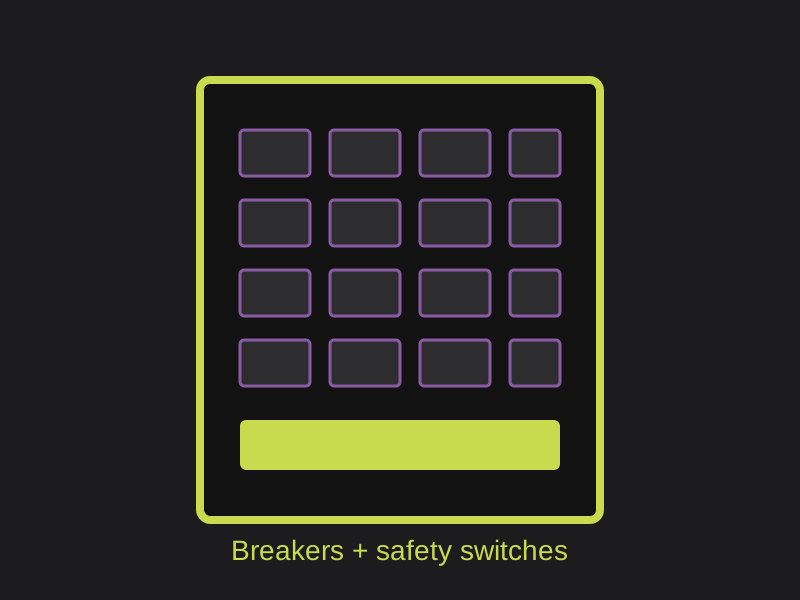
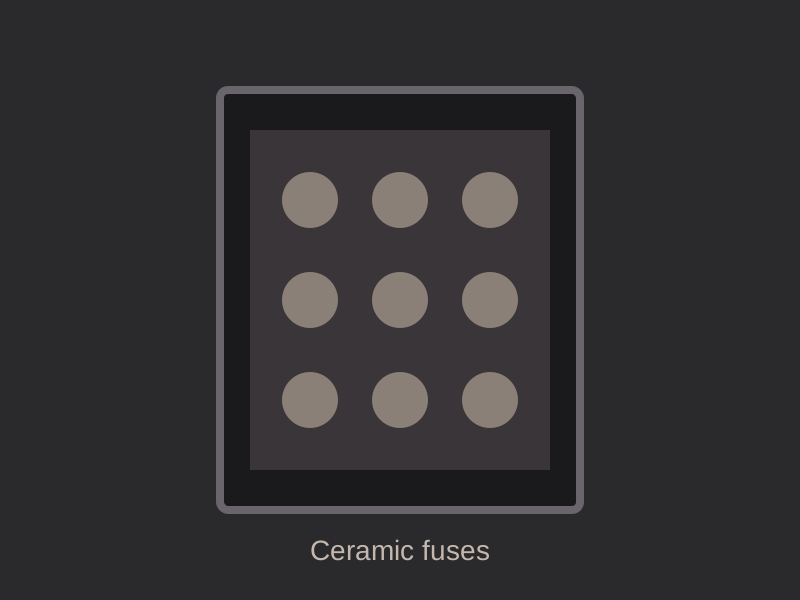
A residential switchboard upgrade in Melbourne typically costs $1,800–$4,500+ in 2026 for moving from an ageing fuse board to a modern breaker board with safety switches, with complex meter positions, three-phase work or full rewires climbing higher. This complete guide explains what you are buying, why RCD protection matters, how Certificates of Electrical Safety (CoES) fit Victorian rules, and how to read a quote that will still make sense after the cover comes off.
Need a switchboard assessment?
Call 1300 24 11 47 — we inspect the board, explain CoES requirements, and give written pricing before any upgrade starts.
The short version
- Typical Melbourne residential switchboard upgrades: about $1,800–$4,500+ depending on circuit count and meter arrangement.
- Ceramic fuse boards and boards without proper RCD protection on power circuits are priority upgrade candidates.
- A Certificate of Electrical Safety (CoES) is required for this class of work in Victoria — it is not optional paperwork.
- Induction cooktops, EV chargers and ducted aircon often force board upgrades when spare ways and load capacity run out.
- Never DIY a switchboard — fixed wiring and meter-adjacent work is licensed electrician territory.
What a switchboard upgrade actually includes
Homeowners often hear “new switchboard” and picture a plastic box. The real job is safer circuit protection, clearer labelling, adequate space for future circuits, and compliance with current installation practice. That usually means removing fuse carriers or obsolete breakers, installing a modern enclosure, fitting MCBs/RCBOs as designed, ensuring RCD protection where required, and testing the installation before issuing certification.
Melbourne’s older stock — Federation terraces, inter-war brick, 1960s–80s veneer — frequently still has boards that were adequate for a kettle and a black-and-white TV. They are not adequate for multiple air conditioners, induction cooking, EV charging and home offices. Heat at the board, nuisance trips, and “we cannot fit another breaker” are the soft warnings. Scorch marks and buzzing are the hard ones.
For service pathways, see our Melbourne electrical services hub and the focused page on switchboard and safety switch upgrades. Cost banding detail also sits in switchboard upgrade cost Melbourne 2026.
Cost ranges Melbourne 2026
| Scope | Typical range | Drivers |
|---|---|---|
| Like-for-like residential board upgrade (common single-phase) | $1,800–$3,500 | Circuit count, enclosure type, access |
| Upgrade including comprehensive RCD/RCBO protection | $2,200–$4,500+ | Number of ways, brand, split load design |
| Board upgrade + meter relocation / complicated mains | $3,500–$7,000+ | Distributor rules, consumer mains condition |
| Three-phase residential / light commercial boards | $4,000–$10,000+ | Load, protection scheme, supply arrangement |
| Temporary make-safe on unsafe board (emergency) | $250–$800+ | After-hours loadings, severity |
Parts quality matters. Cheap breakers in a neat enclosure still fail early. Ask what protection devices are being fitted and whether spare ways are left for the EV charger or induction circuit you already know is coming.
Signs your Melbourne switchboard needs upgrading
- Ceramic or rewirable fuses still in service for power circuits.
- No safety switches (RCDs) on power and/or lighting where current practice expects them.
- Burn marks, heat distortion, buzzing, or breakers that feel hot.
- Insufficient space to add circuits for aircon, cooktop or charger.
- Labels missing, mixed generations of gear, or evidence of DIY alterations.
- Repeated unexplained trips that fault-finding traces to board-level issues.
Also see signs your switchboard needs upgrading for a homeowner checklist.
RCD, RCBO and MCB — plain English
An MCB (miniature circuit breaker) protects against overcurrent — too much load or a short. An RCD (residual current device / safety switch) trips on earth leakage that can cause fatal shock. An RCBO combines both functions in one device per circuit, which is often the cleanest modern approach where space and budget allow.
Upgrading is not only about “more switches.” It is about matching protection to circuit risk — wet areas, outdoors, power circuits, and sensitive loads. For deeper device comparison, read RCD vs RCBO vs MCB in Melbourne.
Certificate of Electrical Safety (CoES) explained
In Victoria, a Certificate of Electrical Safety documents that prescribed electrical work was carried out by a licensed electrician and tested. Switchboard upgrades sit squarely in the kind of work that requires proper certification. The CoES is how owners, landlords, buyers and insurers see that the work was not informal.
What you should expect:
- The licensed electrician responsible for the work arranges the certificate.
- Testing is part of the job — insulation resistance, polarity, RCD trip verification and other checks as applicable.
- You receive documentation to keep with property records.
- The certificate fee and paperwork time should be visible in the quote discussion, not sprung as a surprise.
Energy Safe Victoria provides public guidance on electrical safety, licensing and certification frameworks — start at esv.vic.gov.au. If a quote for a board upgrade never mentions certification, ask why. “Cash job, no paperwork” is not a bargain on a switchboard.
Landlords should file CoES documents with smoke alarm and gas check records. Buyers’ advocates increasingly ask for electrical compliance history on older homes — missing certificates create negotiation friction even when the board looks neat.
Load, EV chargers and future-proofing
A board upgrade is the moment to plan the next five years. If an EV charger, induction cooktop, or ducted reverse-cycle system is on the horizon, design spare ways and discuss main switch / service capacity now. Adding a charger onto an exhausted board later means paying twice for access and downtime.
Three-phase upgrades are a separate conversation for some larger homes and workshops. Do not assume every “board upgrade” quote includes service fuse or distributor-side changes — those have their own processes and timelines.
What happens on install day
Expect a planned outage while the old board is removed and the new assembly is fitted and tested. Sensitive households (medical devices, refrigerated medication, home offices) should plan ahead. Good electricians photograph the old labelling, map circuits, and re-label clearly so you are not guessing which breaker kills the fridge.
If asbestos flashguards or contaminated dust are suspected in very old enclosures, the electrician should pause and follow safe handling practice rather than chiselling blindly. That can affect program and price — better than a contamination incident.
DIY stop rules
- Do not replace fuses with copper coin tricks, oversized wire, or random breakers.
- Do not remove the meter seal or work on distributor equipment.
- Do not add circuits by doubling cables under a single breaker.
- Do not ignore heat or burning smells at the board — call for make-safe.
Emergency board faults after hours are covered in our emergency electrician cost guide.
Meter position, mains and distributor interfaces
Some Melbourne upgrades are simple consumer-board swaps in an accessible cupboard. Others collide with meter panels, combined service fuses, or consumer mains that are undersized or degraded. Distributor rules and appointment windows can extend the program by days or weeks when supply-side changes are required. A quote that assumes “board only” should say so explicitly — and list what happens if mains condition forces a wider scope once isolation begins.
Apartment meter rooms add access control, common-property politics and sometimes limited shutdown windows. Owners-corporation notice may be required even when the work is lot-side. Build that into planning so tenants are not surprised by a daytime outage.
Surge protection, RCBOs and “nice to have” versus necessary
Whole-home surge protection is increasingly discussed alongside board upgrades, especially for homes with solar inverters, EV chargers and sensitive electronics. It is not a substitute for RCD protection. Treat surge devices as an optional specified line item with brand and installation location stated. Likewise, choosing RCBO-per-circuit versus grouped RCD plus MCBs is a design decision with cost and discrimination trade-offs — ask your electrician to explain nuisance-trip behaviour either way.
Labelling is underrated. A beautiful board with cryptic breaker names wastes the upgrade the first time someone needs to isolate the hot water. Circuit schedules should match reality after testing, including shed, garage and outdoor circuits that previous renovations forgot.
Buying, selling and landlord disclosure angles
Buyers’ building inspectors flag fuse boards and missing safety switches constantly in Melbourne auctions. Upgrading before sale can reduce negotiation leverage against you; upgrading after purchase is often week-one priority for new owners who saw scorch marks in the pre-auction rush. Landlords should not wait for a tenant shock incident — pair board condition with smoke alarm and gas check cycles in the compliance pack.
Keep before/after photos and the CoES together. When a future electrician asks what was done in 2026, paperwork beats memory.
Solar, batteries and switchboard interactions
Homes with rooftop solar already have inverter connections and often export limiting arrangements that interact with board layout. Adding a battery or EV charger later may need dedicated ways and CT placement space. Tell your electrician about existing solar on day one of the quote — redesigning a brand-new board six months later because the inverter leads were an afterthought wastes money.
If solar isolation and board upgrade happen together, plan the outage so the inverter shutdown sequence is correct. DIY “I’ll just turn the solar off” without understanding DC isolation is another hard stop.
Partial upgrades and staged budgets
Sometimes cash only covers RCD protection additions this year and a full enclosure next year. Ask what staging is technically sensible versus what leaves an unsafe hybrid. Temporary make-safe after a burning incident is not the same as a staged aesthetic upgrade — safety first, cosmetics never on a live hazard board.
How 24/7 Service Mate approaches board upgrades
Kevin’s team assesses the existing enclosure, circuit schedule, earthing arrangements and likely future loads. You get a written scope: enclosure, protection devices, RCD strategy, spare ways, estimated outage window, and CoES inclusion. If the mains or meter position forces distributor involvement, we explain that pathway instead of pretending a consumer board swap fixes a supply-side limit.
Living through the outage day
Charge phones, pause fridge door opening, relocate work-from-home calls, and plan meals that do not need the oven. Medical devices needing power should have a contingency before the main switch goes off. Tell the electrician about aquarium pumps, sump pumps and alarm panels so temporary arrangements can be discussed.
When power returns, walk the home with the electrician to confirm every circuit label matches reality — better to fix labels on the day than guess for years.
Choosing protection layouts with your electrician
Ask whether lighting and power are on separate RCDs or RCBOs so a bathroom fault does not black out smoke alarm circuits unnecessarily. Discuss spare ways for the projects you already know are coming. Confirm main switch rating and whether any consumer mains concerns were sighted. A board upgrade is a conversation about how the house will be used, not only about replacing ceramic fuses with shiny breakers.
If you have a generator inlet or UPS aspirations, mention them now — retrospective space is expensive.
After the upgrade — living with the new board
Test each residual current device using its test button on a schedule your electrician recommends, and teach adults in the home which main switch kills everything. Keep a torch near the cupboard. Update your household notes with the circuit schedule photo. If breakers trip in patterns after the upgrade, call back — nuisance trips can mean a circuit fault that testing flagged for follow-up, not a defective new board by default.
If you work from home on critical uploads, schedule the outage for a quieter calendar day and tell clients ahead. A board upgrade is planned downtime — treat it like a known network maintenance window.
Keep spare torch batteries in the cupboard; you will thank yourself the first time you need to find the right breaker at night.
For homes adding induction cooking soon, discuss dedicated circuit sizing during the board design so you are not opening the enclosure twice in twelve months.
Label the torch shelf too.
FAQs
How much does a switchboard upgrade cost in Melbourne?
Many residential upgrades fall between $1,800 and $4,500+, with complicated meter arrangements, three-phase work or combined mains issues higher. Get a site-specific quote.
Is a Certificate of Electrical Safety mandatory for a switchboard upgrade?
Prescribed electrical work of this type requires proper certification by the licensed electrician. Ask for the CoES to be included and provided on completion.
Can I upgrade only one safety switch instead of the whole board?
Sometimes a limited addition is possible if space and design allow. Many old fuse boards are better replaced as a system so protection, labelling and future capacity are coherent.
Will I lose power for the day?
Plan for a multi-hour outage on install day. Exact duration depends on circuit count and complications found once the cover is off.
Does a new switchboard mean my house is fully rewired?
No. A board upgrade modernises protection at the origin. Ageing cable in walls may still need attention later. The electrician should flag obvious circuit risks found during testing.
Should landlords upgrade rental switchboards?
If the board lacks adequate safety switches or shows damage, yes — it is both a safety and risk-management issue. Pair electrical compliance with smoke alarm and gas check routines; see our landlord compliance pillar for the wider pack.
If your Melbourne board is still on fuses, short on safety switches, or blocking the EV charger you already bought, call 1300 24 11 47 for a switchboard upgrade quote that includes protection design and Certificate of Electrical Safety — not just a new plastic lid.
Related reading
Explore our Melbourne electrical services or see what is included in switchboard and safety switch upgrades. For more practical detail, read Burning Smell from Switchboard Melbourne: What to Do Before the Electrician Arrives and Hot or Buzzing Switchboard Melbourne: Heat, Noise & Fire Warning Signs.
Need practical help now?
If your board still runs fuse wire or trips constantly, schedule a Melbourne switchboard upgrade and sleep safer—call 1300 24 11 47.
